

 UNIVERSUS
  Riftbound - League of Legends TCG
  Shop Products
  News
News  Organized Play
  Find A UniVersus Store
  Retailers Hub
  UniVersus Gaming Network
  Retailer FAQs
The Cube! – Guest Article By Nick Ragan
Hi, this is Nick Ragan. Many of you might know me from my champ card removing 8 cards to do very silly things. Or you might know me as that guy with the massive suit case full of random cards at regionals always talking about some kind of cube? Well this is about that cube.
As people may have noticed there’s an event on the world’s calendar called The Cube, or should I say “THE CUUUUBE” and may be wondering what that is? Or if you know what a draft cube is, you might be wondering what’s in it, or how was it made? So I decided to write this up to hopefully answer those questions.
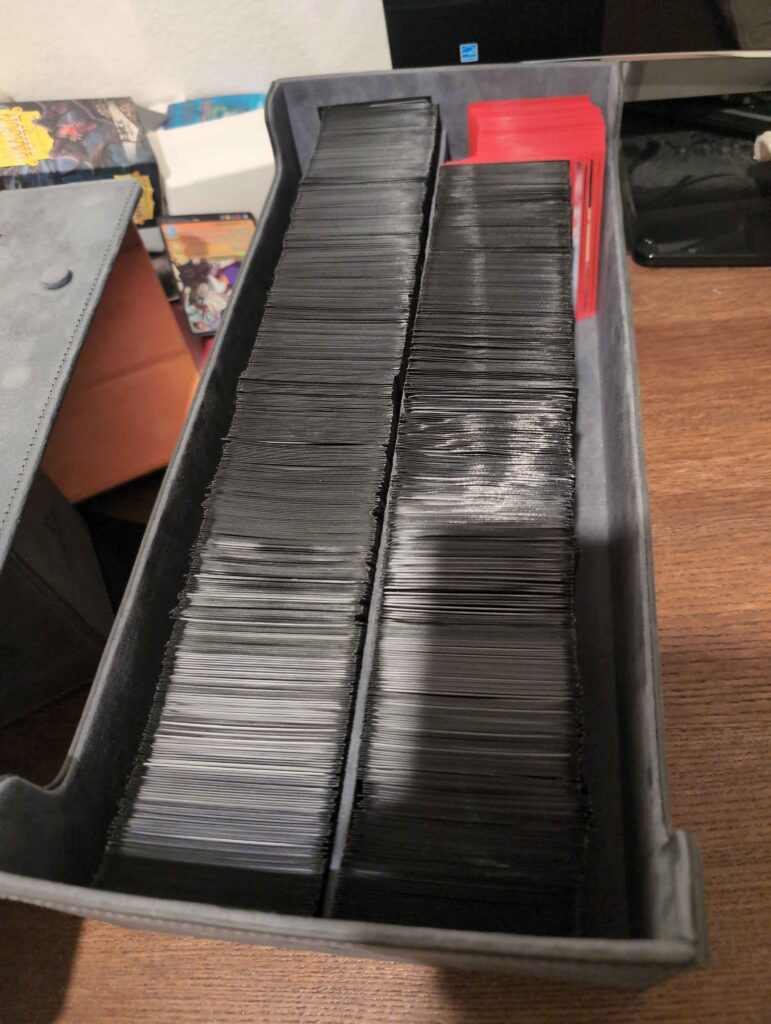
Let’s start with what is a draft cube. Simply, it’s a collection of cards designed to be played in a drafting experience. There are a lot of ways to draft cards, but I’ll briefly go over the way that it’ll work at worlds.
Each player will be handed a deck box containing 5 characters and 60 non-character cards(And 1 Roman Cancel token but that’s just in case you draft a Tension card), these will all be random cards from the draft cube. Players should not look at anything but the character cards at this time. The players will be broken into 4 pods of 4 players for the draft. You will start by drafting your characters, picking one from the 5 characters in your box then passing the remaining 4 to the player to your left, you will then take 1 from the 4 that got passed to you and pass the remaining 3 to the player to your left, this repeats until all 5 characters have been drafted.
Once the characters have been drafted, each player will take the top 10 cards from their pile of 60 non-character cards. This will be your first “pack” of the draft. They may now look at these 10 cards. After looking over the options in your pack, you will pick 1 card to draft and pass the remaining 9 cards to the right this time. You will then take the 9 cards that got passed to you and take 1 passing the remaining 8 to the right. This repeats until all cards in the pack are drafted. Once the pack has been drafted each player takes another 10 cards off the top of their pile and repeats the drafting process this time passing to the left. After all 6 “packs” have been drafted each player should have 60 non-character cards and 5 characters from which to build their deck.
So you have your 60 cards, but how do you build your deck from that? With this draft we use what’s used to be referred to as “loose symbol chaining” which means your character just needs to have a symbol in common with a card to play the card. Nowadays it’s probably easier to just say all symbols are treated as the attuned version of the symbol. There are a few other changes to normal deck building and game rules to accommodate the limited environment. The minimum deck size is reduced to 40 cards, and to account for the smaller deck size you will only remove 5 cards instead of 10 when you cycle. In the unlikely scenario that you are unable to build a legal 40 card deck you may reverse a card in its sleeve and play it as a 3 difficulty, 4 check infinity foundation with no block or effect. As you may have noticed these are some really bad stats, so it’s highly advised to pay attention to your symbols while drafting.
Now that we’ve gotten how a cube draft works, you may be wondering, how did you make the cube and what’s all in it? Well as to what’s in it, here it is! (Or at least close to it, there may be minor tweaks as my locals and I continue to test it in the lead up to worlds, there may be minor changes in the event we find a something that doesn’t work that we missed in design)
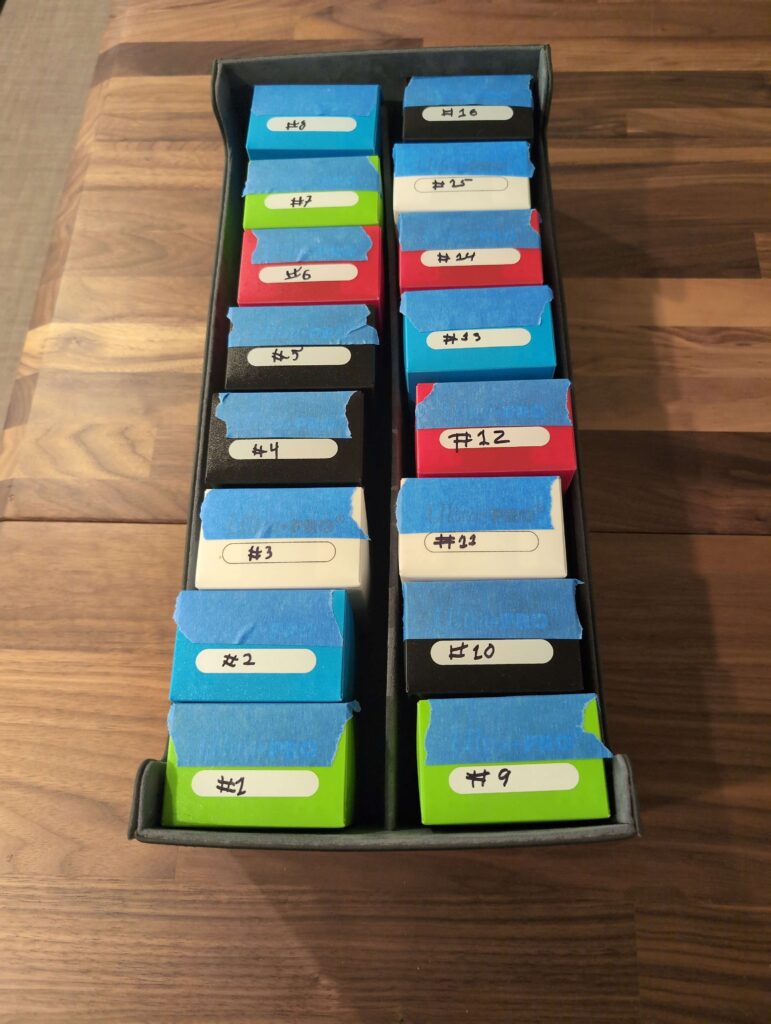
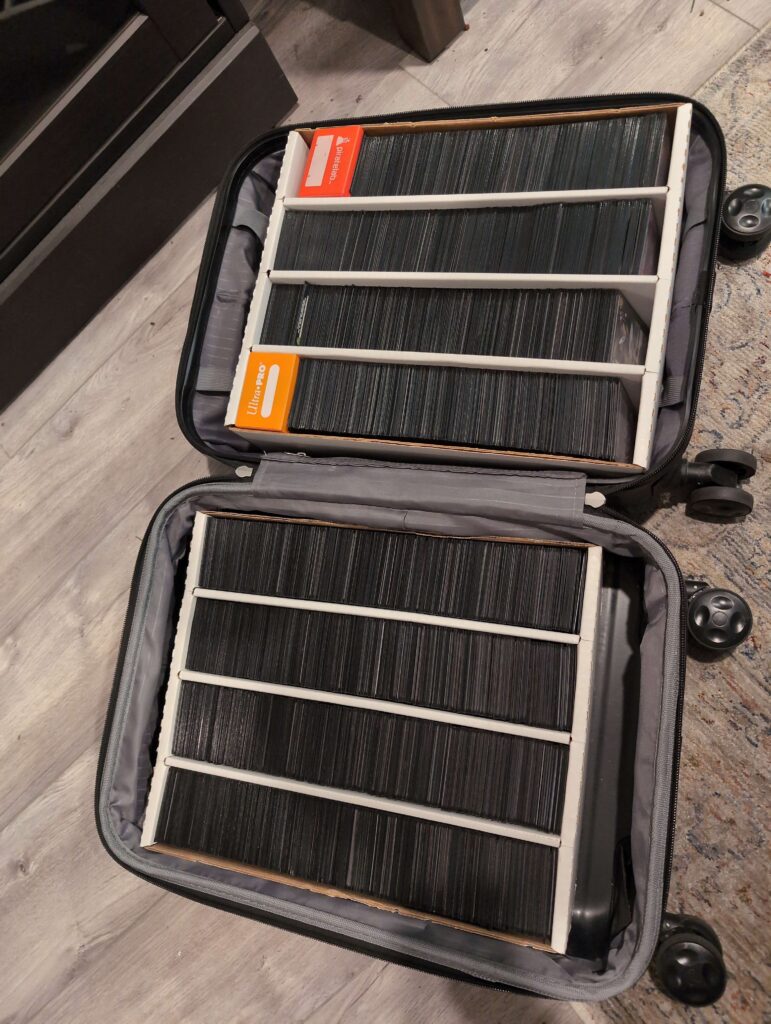
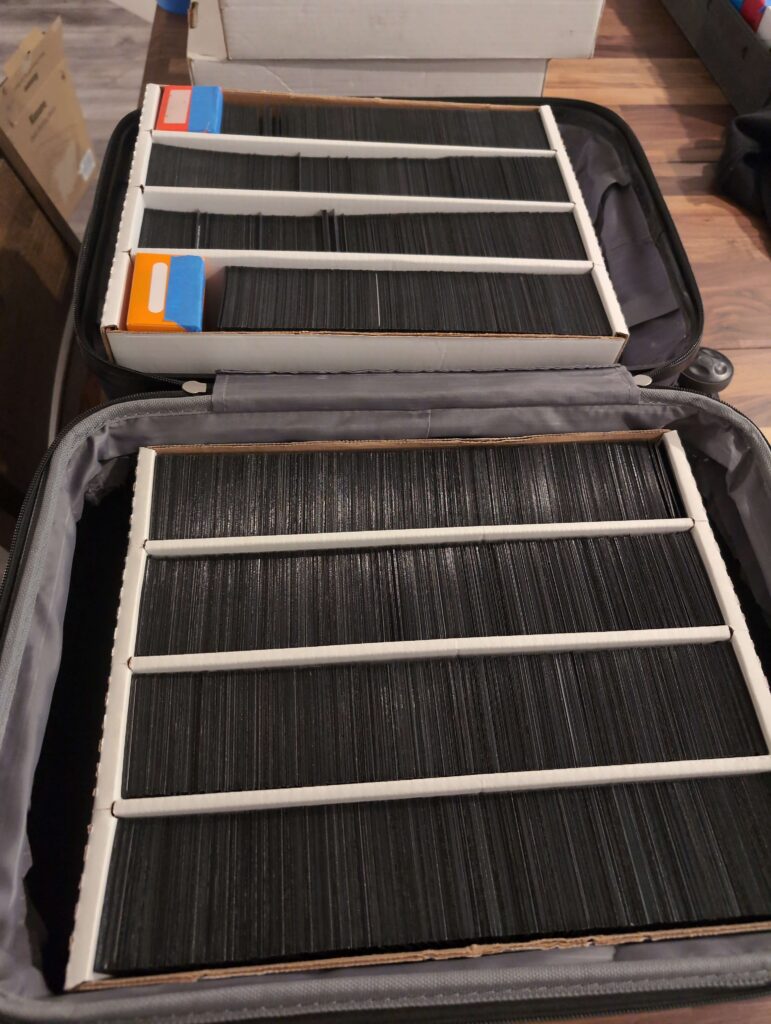
As to how I made it, that requires a bit of history. This is actually the second cube I made, the first one I made in 2021 after the release of MHA01, I found that I had a ton of bulk MHA and old retro cards that I just wasn’t doing anything with, I had played draft cubes for other CCGs but had never seen one for UVS. So I spent a few weeks putting together a 1000 card draft cube perfectly balanced across all 12 symbols and took it to the first major in person event of the MHA era taking place in Omaha. There the cube had its first test, a one on one draft with Kevin Broberg, and it was so much fun. I took the cube to basically every major event I went to and had a blast drafting it with friends at each and every one. And as new cards came out I wanted to add them to the cube, so I did and it grew, and grew…and grew. Eventually reaching a colossal almost 4000 cards. And I started running into issues of it just being hard to travel to events with it in tow. So I started considering making a smaller travel cube and when UVS reached out to make the cube an event at worlds I jumped at the opportunity and decided this was the perfect time to make my new travel cube.
When designing the new cube I set myself some goals. I wanted the new cube to be symbol balanced again, the old cube had slowly grown unbalanced and while it still worked there were times when it showed and you’d get slightly awkward drafts. I wanted to have the new cube be more new player friendly while still having the cool retro cards that made the old cube so much fun. To that end I set a rule, no cards with erratas or massively outdated wordings, someone who knows the rules of UVS should be able to read each card and generally understand what it does. And finally there shouldn’t be any hyper specific requirements for a card to be good, so characters with effects that limited them to 1 or 2 keywords were out and were complex combo requirements.
I worked with one of my locals who also really loves drafting to design the cube. The first step was doing some math. We figured around 1000 cards was the right amount to still be easy to travel with so after some quick calculations we settled on a 16 person cube. At 5 character cards a person and 60 non-characters a person that’s 80 characters and 960 non-characters for a total of 1040 cards.
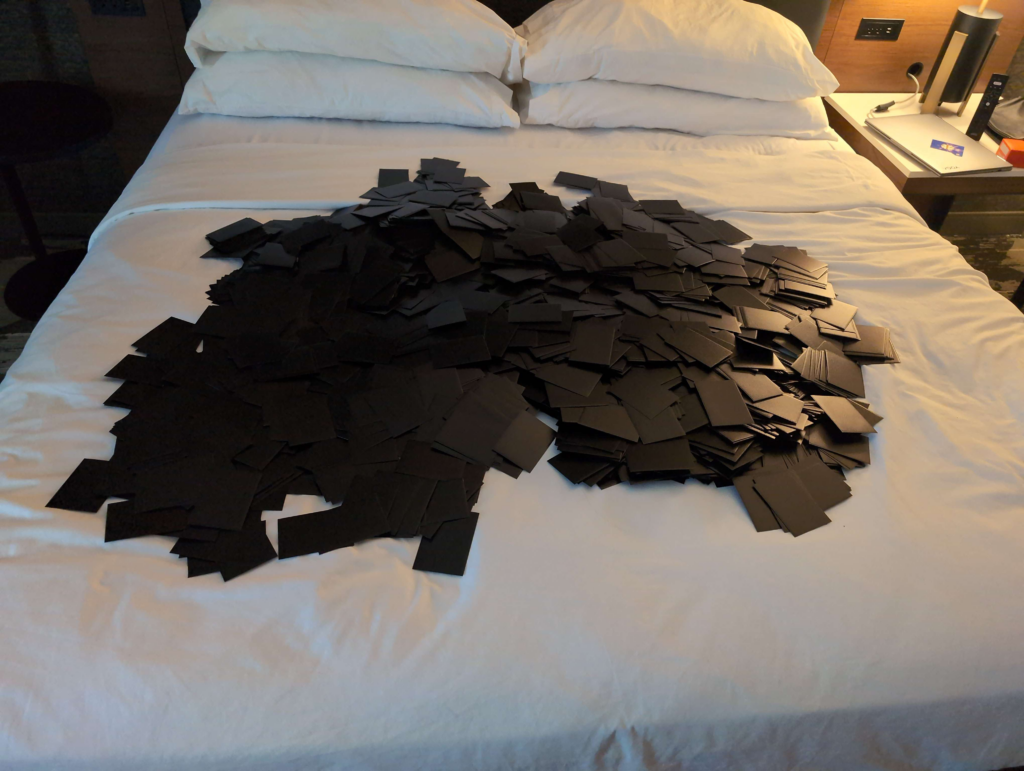
The first step was to come up with a batch of 80 characters, which turned out to be the hardest step in the entire design. Our first approach was just throwing all the characters we wanted into a list and trying to symbol balance from there. This proved to be a bad idea…. After a first pass though the list we still needed about a dozen characters but couldn’t add any character with Chaos or Earth, not more than 1 more with Void, but still needed like 10 Good and Evil characters. So we realized this wasn’t going to work at all this way, so we scrapped the list and tried a new approach. We would take 1 character we wanted in the cube and then find 3 other characters that didn’t share a symbol with them or each other who all worked in the requirements we set for the cube and then put together 20 pods of 4 characters this way to get our 80 characters. To make it a bit easier on myself I even made it a bit of a game at the Buffalo regional to go around and have people try to make these pods of 4, sadly not everyones suggestions made it into the final cube, but if you helped out with a pod at the regional, thank you, it was great fun to do and all the pods did end up helping us consider other characters for the finished design that we had overlooked.
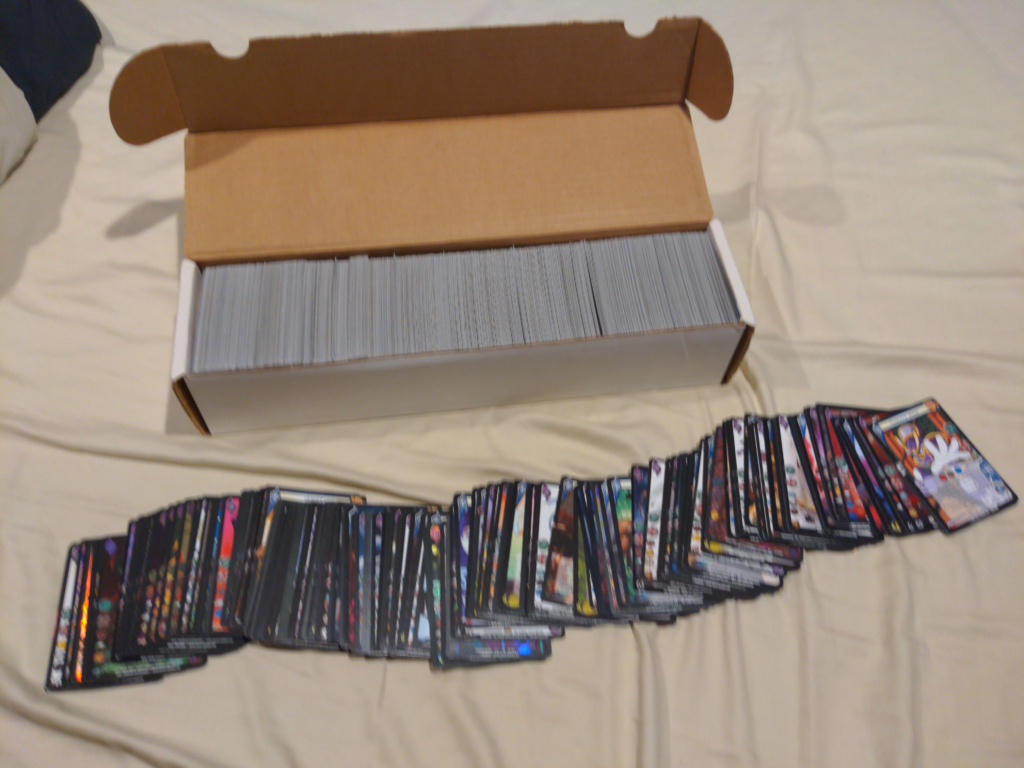
After we finished the characters, we moved on to the bulk of the cube. For this we did a hybrid of the 2 methods from the character pod, starting by picking a “theme” of cards we wanted in the cube, for instance the first pod I did was “speed hate” foundations, and filling a list with them the cards we wanted. Then once we had a list we looked at what symbols were short on card count and filled them in with other cards that might not have matched the theme of the grouping but were still cards that would be good in the cube and fit the missing symbols. There by making a large block of symbol balanced cards. Unlike with characters we had a lot more head room on this step for balancing the numbers and a lot more options of cards to fill in the types so it wasn’t too hard, in fact in the end, we ended up with a plethora of cards that I would have loved to have in the cube but there simply wasn’t room for.
We did have to make some tough choices in making the cube. One of the big ones was what to do with attuned cards? There are a lot of very fun and interesting attuned cards in the game but they pose a problem in a draft environment. While attuned cards can open up a lot of options for deck building in a constructed environment they have the opposite effect in draft being quite limiting since every symbol is effectively an attuned symbol in draft a card that is natively attuned is just a one symbol card for the purposes of a draft, where as a card with 3 symbols suddenly has 3 attuned symbols making it much more versatile. We did eventually find a home for a small handful of attuned cards in the cube, in fact they were quite helpful in allowing us to include some 2 and 4 symbol cards into the cube that we really wanted in there without messing up the symbol balance.
We had 2 helpful tools for building the cube, various UFS/UVS card databases as always are a great resource for searching for what cards we wanted in the cube. But for balancing the symbols nothing beats a good spreadsheet, we made a tab for every card type and a cell with a check box for every symbol with a calculation at the top to keep track of all the symbols. Never underestimate how helpful a spreadsheet can be for something like this.
Hopefully this has given people some insight into how the cube was made. As a closing thought I think I’ll give everyone who read this far a few cube drafting tips that can hopefully be helpful should you decide to join an event with my cube or make your own for you and your friends to play with back at your friendly local game store.
- When drafting your characters, it’s a good idea to try and draft several on similar symbols. You can often figure out you are fighting one or 2 other people in your draft pod for a symbol, while you see another symbol go round and round. If you have a diversity of characters in similar symbols you can pivot to a different character who might not have as much contention for cards, while still being able to use a fair few of the cards you’ve already drafted.
- Since your minimum deck count is 40 instead of 60 you need to adjust your deck ratios to match. The average number of attacks you are looking for is 12-14 in a 40 card deck
- Don’t stress too much if you end up with some cards you can’t play in your deck, you get to cut 20 of the 60 cards you draft and the last card or two of a pack will often be something you can’t play just due to there being so few cards left.
- Drafting can be stressful due to having to read a bunch of new cards, and it may seem overwhelming at first but just read the cards in front of you at any given moment and remember you don’t even need to read all of them if you know the symbols you are drafting on already, just separate out the ones you can play and read those, it’ll make what seem like a big intimidating task seem much smaller.
- And finally have fun, that’s why we’re doing this at the end of the day, to have fun with friends
Hope to see y’all at the cube event at worlds.